

As its ties with the US become complex, India seems to be recalibrating its foreign policy with a renewed focus on regional alliances—particularly with Russia and China. How is New Delhi pursuing a pragmatic, multipolar strategy anchored in national interest
Our Bureau
New Delhi / Beijing / Moscow / Washington, DC
In a world roiled by strategic realignments and geopolitical flux, India finds itself at a critical juncture—balancing its relationship with the West while deepening ties with old partners like Russia and cautiously reopening diplomatic channels with China. The past weeks have seen a flurry of high-level visits, summits, and diplomatic signalling that point to a recalibrated Indian foreign policy—one that is increasingly multipolar and grounded in realism.
While New Delhi continues to value its strategic partnership with Washington—exemplified by close defense cooperation and counter-terrorism coordination—it is also asserting its autonomy by engaging robustly with Beijing and Moscow, even amid historical tensions and new geopolitical risks.
A New Chapter with China?
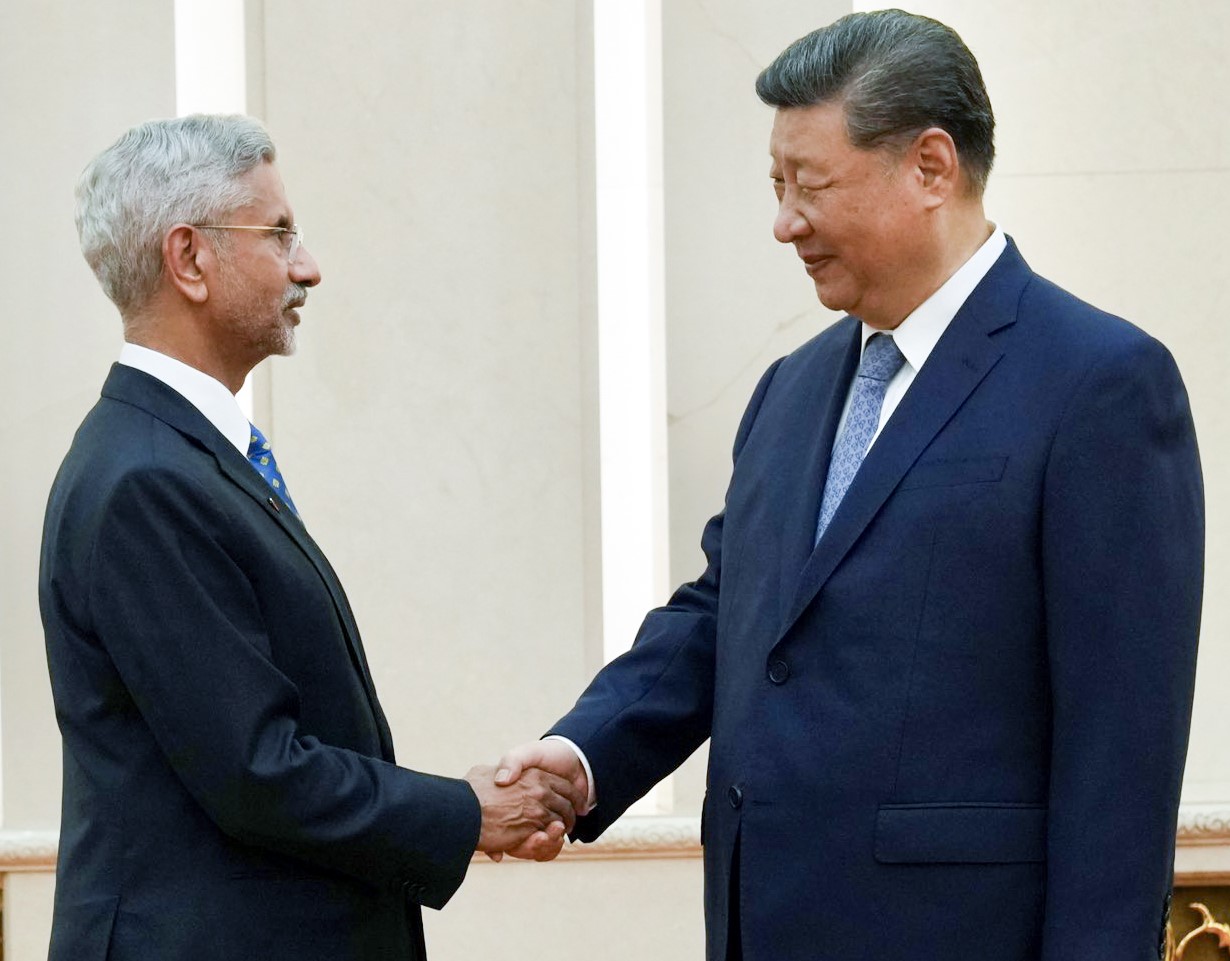
External Affairs Minister S. Jaishankar’s recent visit to China marked a significant shift in tone from the post-Galwan freeze in India-China relations. The visit, which included meetings with Chinese President Xi Jinping, Vice President Han Zheng, and Foreign Minister Wang Yi, focused on stabilizing the bilateral relationship and reactivating key diplomatic channels.
Calling for a “far-seeing approach” to bilateral ties, Jaishankar emphasized the need to address contentious issues, particularly the prolonged border standoff. “Incumbent on us to address aspects related to the border, normalizing people-to-people exchanges and avoiding restrictive trade measures & roadblocks,” he posted on X after his meeting with Wang Yi.
This visit followed Defense Minister Rajnath Singh and National Security Advisor Ajit Doval’s own meetings in China under the Shanghai Cooperation Organization (SCO) framework, suggesting a deliberate attempt by India to engage Beijing at multiple levels. Jaishankar’s call on President Xi Jinping, where he conveyed greetings from President Droupadi Murmu and Prime Minister Narendra Modi, added symbolic heft to the visit and hinted at a strategic thaw.
These engagements indicate that India is seeking a structured detente with China, not driven by trust but by necessity and strategic calculus. With global supply chains shifting and China’s influence in the Global South rising, India’s decision to re-engage reflects a broader strategy of regional balance and diversification.
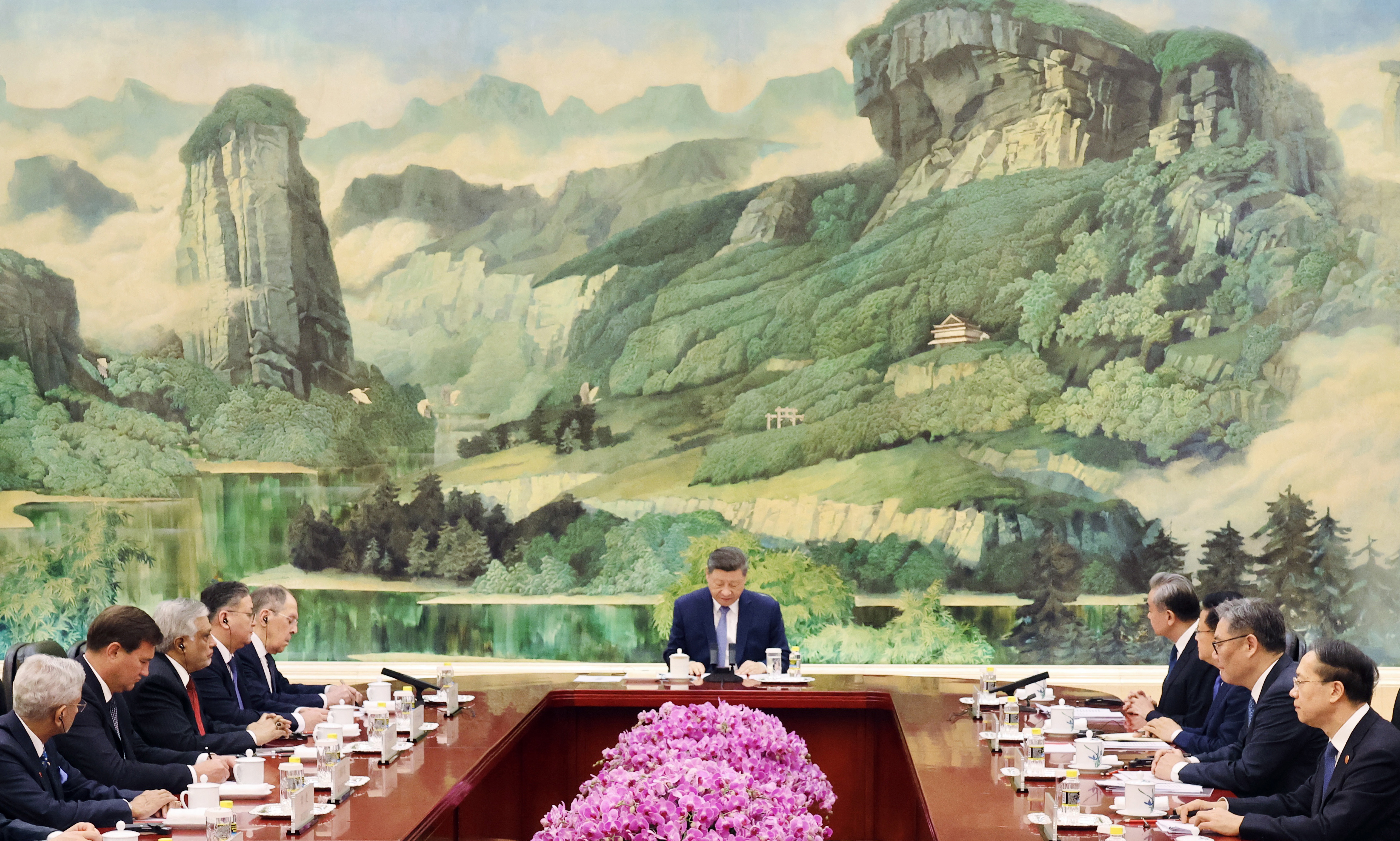
India’s participation in the Shanghai Cooperation Organization (SCO) meeting in Tianjin was not just about China. It was also a reaffirmation of India’s belief in regional multilateralism. Jaishankar used the platform to warn against rising “conflicts, competition, and coercion” and emphasized the importance of de-risking the international order.
The Chinese Foreign Minister’s five-point plan for strengthening the SCO, and his call for resisting protectionism and hegemony, found partial resonance in Jaishankar’s address. While Delhi remains wary of China’s expanding footprint in South Asia and the Indian Ocean, it recognizes the value of platforms like the SCO to push its regional agenda and connect with Central Asian republics, Russia, and even Iran.
The SCO also provides a controlled diplomatic environment to interact with Beijing—avoiding bilateral grandstanding while maintaining dialogue under a multilateral umbrella.
The Revival of RIC?
Amid this flurry of regional activity, there has also been speculation about a possible revival of the Russia-India-China (RIC) trilateral format. The RIC, conceived in the 1990s as a Eurasian counterbalance to Western blocs, has remained dormant in recent years due to growing China-Russia proximity and India’s rising friction with Beijing.
While the Chinese Foreign Ministry said it “stands ready to maintain communication with Russia and India on advancing the trilateral cooperation,” Indian officials were more guarded. MEA spokesperson Randhir Jaiswal noted, “There are currently no discussions underway regarding the scheduling of such a dialogue.” However, he acknowledged that RIC remains a valid consultative mechanism to discuss global and regional issues.
The ambiguity leaves the door open for future engagement—especially as India continues to hedge its bets amid growing East-West polarization.
The India-Russia relationship remains one of strategic depth—anchored in defense, energy, and civil nuclear cooperation. The next India-Russia Annual Summit is set to be held in Delhi, with dates to be decided soon. The last summit, held in Moscow in July 2024, saw President Putin confer Russia’s highest civilian award—the Order of Saint Andrew the Apostle—on PM Modi, underscoring the personal rapport between the two leaders.
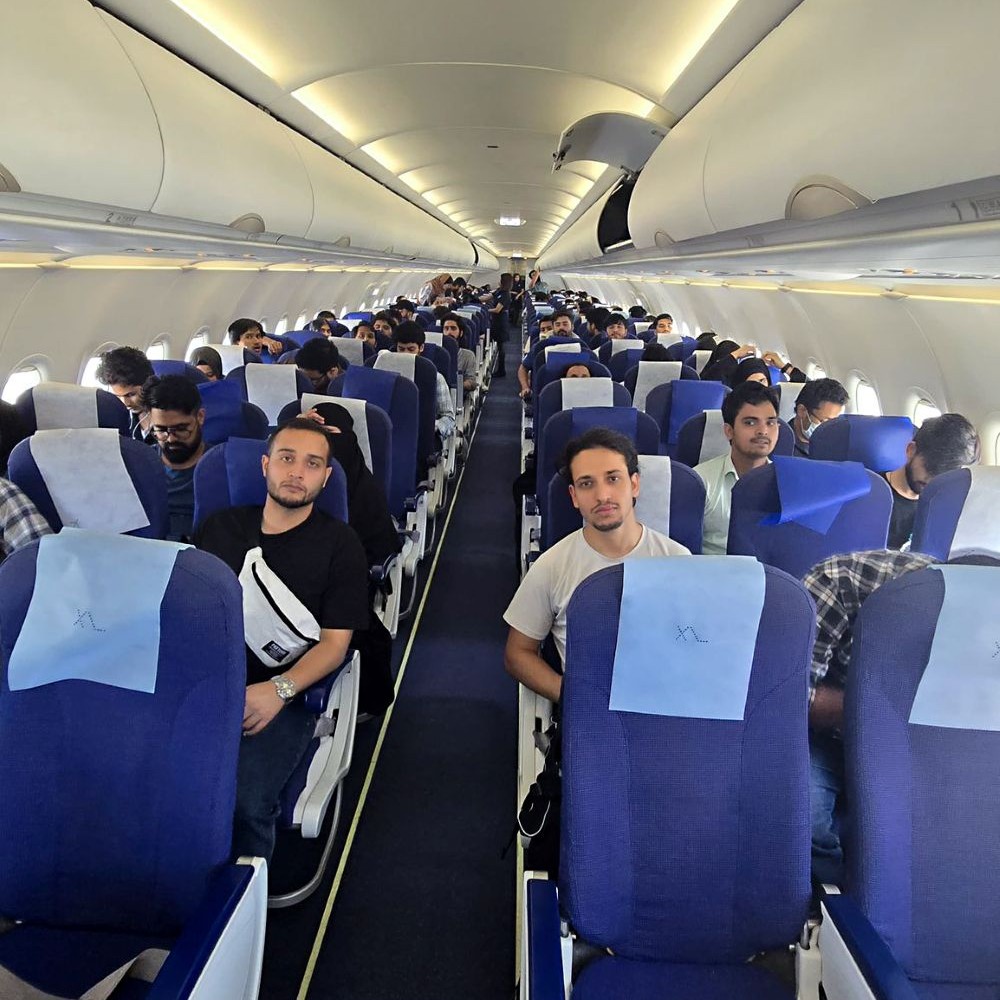
Yet, the partnership faces new complications. India has been quietly distressed by the revelations that 126 Indian nationals were lured into serving in the Russian Army amid the Ukraine conflict. While 96 have returned, 12 are confirmed dead and 16 are still missing. India is now in constant contact with Moscow to secure the release of the remaining individuals.

Despite this troubling development, Delhi continues to view Moscow as a critical partner. The MEA’s balanced tone suggests that the government is keen to resolve the humanitarian issue without letting it derail the broader strategic engagement.
Cooperation Amid Constraints
While India and the U.S. share robust defense and technology ties, recent political and policy friction has cast a shadow over the relationship. The latest move by the Trump administration to designate The Resistance Front (TRF)—a Lashkar-e-Taiba proxy—as a Foreign Terrorist Organization (FTO) and Specially Designated Global Terrorist (SDGT) was welcomed in India. TRF was responsible for the April 22 Pahalgam terror attack that killed 26 people, mostly tourists, and triggered a brief military escalation.
External Affairs Minister Jaishankar hailed the decision as a “strong affirmation” of India-U.S. counter-terrorism cooperation. However, many in South Block believe that mere designations—however symbolic—do not adequately address the root problem: Pakistan’s support to cross-border terrorism and the lack of sustained U.S. pressure on Islamabad.
As one official privately noted, “These actions are helpful, but they don’t change the security calculus on the ground. What India needs is consistent, actionable support.”
A Dynamic Doctrine
What emerges from this web of engagements is a dynamic and adaptive Indian foreign policy—one that is increasingly transactional, multi-vector, and regionally anchored. The days of fixed alliances are over. New Delhi is charting its own course through careful calibration, choosing issue-based partnerships and flexible groupings over rigid ideological blocs.
India’s participation in the Quad with the U.S., Japan, and Australia is not inconsistent with its outreach to SCO or RIC. Nor is its growing defense cooperation with France at odds with its energy ties with Iran or its balancing act in West Asia.
As global fault lines deepen—from the Indo-Pacific to Eastern Europe—India is moving to ensure it is neither isolated nor predictable. It is engaging with the West where interests align but building strategic depth in the East where long-term influence lies.
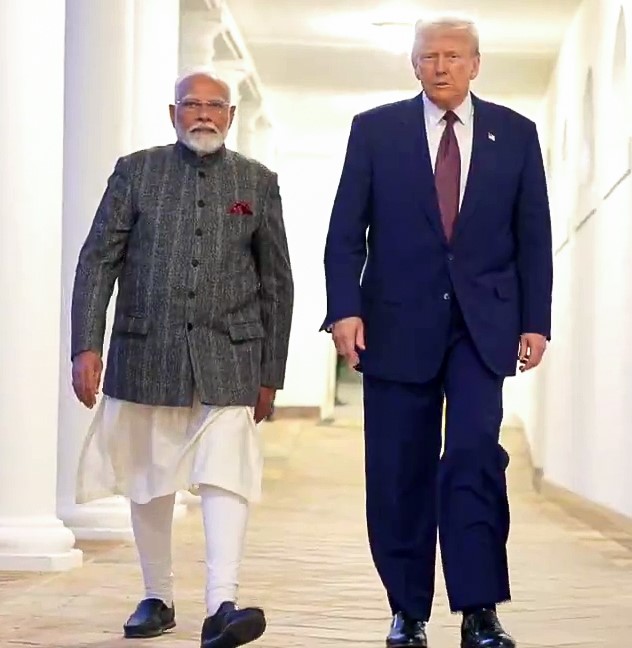
Adding to the geopolitical churn is the upcoming visit of U.S. President Donald Trump to India later this year for the Quad Summit—his first visit since returning to office in 2025. While the summit underscores India’s continued commitment to the Indo-Pacific and its alignment with democracies like the U.S., Japan, and Australia, it also places New Delhi in a delicate position. Trump is expected to press for stronger military coordination and economic alignment within the Quad, but Indian officials remain cautious, keen to ensure that the forum does not become overtly anti-China. At a time when India is re-engaging with Beijing and reaffirming ties with Russia, Trump’s arrival presents both an opportunity and a test of New Delhi’s balancing act. Indian diplomats are reportedly preparing to present a vision of the Quad that focuses on connectivity, technology, and regional resilience—areas where strategic cooperation with the U.S. need not come at the cost of regional diplomacy.
The Road Ahead
India’s foreign policy in 2025 is marked by quiet assertiveness and strategic agility. With China, it is moving cautiously toward engagement without ignoring unresolved tensions. With Russia, it is reaffirming trust even while dealing with uncomfortable fallout. With the U.S., it is cooperating on key issues like terrorism but resisting overreach and conditionalities.
The RIC format, though dormant, remains an option—particularly as India seeks to navigate a future where multipolarity, not bipolarity, will define global order. Whether this balance holds will depend not just on India’s moves, but also on how the U.S., China, and Russia evolve their own roles in this contested century.
In an increasingly volatile world, India’s goal is not to choose sides, but to remain a side of its own. As Foreign Minister Jaishankar once said, “In a world of all against all, India must be for itself.” That doctrine is now being put to the test.