

Our Bureau
Dhaka
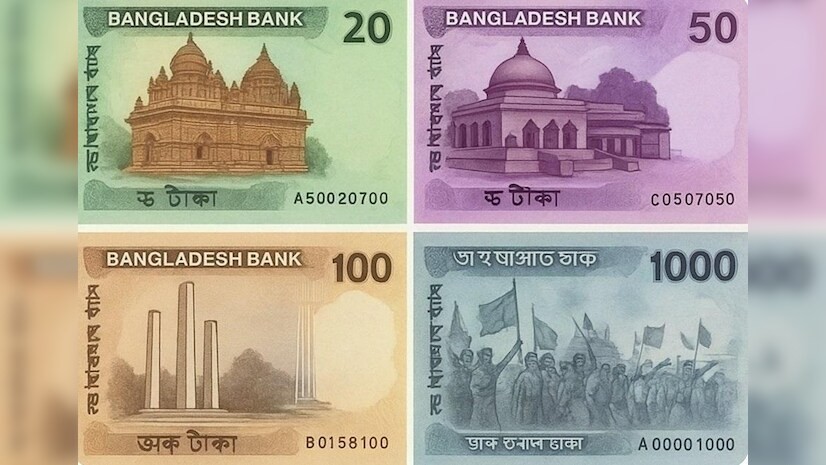
Bangladesh has introduced a new series of currency notes, replacing the longstanding image of the nation’s founding father, Sheikh Mujibur Rahman, with depictions of Hindu and Buddhist temples and other cultural landmarks. The move, announced by the interim government led by Nobel Laureate Muhammad Yunus, marks a significant shift in the country’s approach to national symbols.
The Bangladesh Bank began circulating the new Tk 1,000, Tk 50, and Tk 20 notes on Sunday, just ahead of the Eid holiday. These notes feature motifs such as ancient temples, artwork by the late Zainul Abedin, and the National Martyrs’ Memorial, which commemorates those killed in the 1971 liberation war. According to Arif Hossain Khan, a spokesperson for Bangladesh Bank, the redesign is part of a broader initiative to highlight the “historical and archaeological architecture of Bangladesh.” The new notes deliberately avoid human portraits, focusing instead on the country’s rich cultural and religious heritage.
The rollout is being conducted in phases, with the first batch of notes available at the central bank’s main office in Dhaka. Existing currency featuring Sheikh Mujibur Rahman will remain legal tender and continue to circulate alongside the new designs.
The decision has sparked debate across Bangladesh, where Mujibur Rahman’s image has been a fixture on banknotes since the country’s independence in 1971. While some view the change as an inclusive celebration of Bangladesh’s diverse heritage, others see it as a departure from honoring the nation’s founding leader.
The currency revamp comes at a politically charged time. On the same day, a Bangladesh tribunal indicted former Prime Minister Sheikh Hasina on mass murder charges related to a crackdown on student protests, further intensifying the national conversation.
Officials say the new banknotes will eventually be issued in all denominations, with future releases to follow from the central bank’s regional offices. The government maintains that the redesign aims to foster unity by showcasing Bangladesh’s pluralistic identity.