

Our Bureau
New Delhi
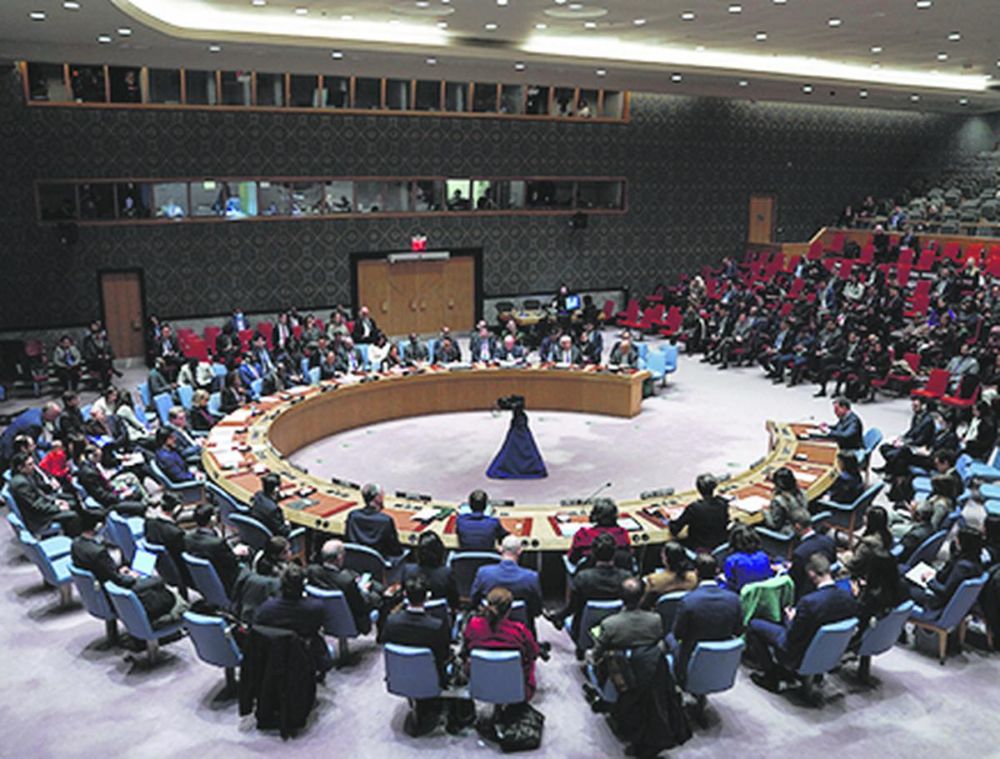
The United Nations Security Council (UNSC) starkly slammed Pakistan during the closed consultation held at the council for discussing the deadly Pahalgam terror attack that took place in India and killed 26 people on April 22.
The UNSC, while pointing to “restraint” and “dialogue” as the only possible solutions, grilled Pakistan on a number of concerns. The envoys present put Islamabad in a tight spot over the involvement of Lashkar-e-Taiba (LeT) in the attack and also refused to accept the “false flag” narrative given by the country.
The council stressed on taking accountability as India had highlighted clear evidence of cross-border linkages to the terror assault last week. Pakistan, on the other hand, had denied its role and instead expressed readiness for a “neutral” third-party investigation with the involvement of international powers like China and Russia.
Citing Pakistan’s nuclear rhetoric in the wake of its recent missile tests, the members of the global security body dismissed the country’s attempt to internationalise the situation.
Pakistan also raised the issue of India’s suspension of the Indus Waters Treaty of 1960, saying, “Water is life, not a weapon. These rivers sustain over 240 million Pakistanis.” The insights were given by Pakistan’s Permanent Representative to the United Nations, Asim Iftikhar Ahmad, who said the objective of the closed consultations was to enable a discussion on the deteriorating security environment between India and Pakistan. He said it is imperative to have an exchange of views to de-escalate the situation, so as to avoid confrontation that could lead to serious consequences.
Ahmad said that Pakistan reiterated its “commitment to peaceful, cooperative relations with all our neighbours, including India”. “We remain open to dialogue based on mutual respect and sovereign equality,” he added
He also stressed on Pakistan defending its sovereignty and territorial integrity incase of any war-like situations.
Before the UNSC meeting, India’s former Permanent Representative to the UN Ambassador Syed Akbaruddin expected no “consequential outcome” from the closed UNSC meeting. He had said, “a discussion where a party to the conflict seeks to shape perceptions by using its membership of the Council. India will parry such Pakistani efforts.”
António Guterres, the UN Secretary-General, had also condemned the terror incident ahead of the talks, saying that “targeting civilians is unacceptable – and those responsible must be brought to justice through credible and lawful means.” Sharing his outcome of the meeting later, Guterres termed it “helpful and productive”.
Pakistan is one of the 10 non-permanent members of the council along with Algeria, Denmark, Greece, Guyana, Panama, South Korea, Sierra Leone, Slovenia, and Somalia. The five veto-wielding permanent members include China, France, Russia, UK, and the US.
The UNSC meeting was arranged on Islamabad’s insistence in view of the mounting disputes between the two nuclear armed neighbours, seeking to resolve the issue in an amicable way.