








H-1B, AI, Skills and the Next 20 Years of the US-India Talent Partnership
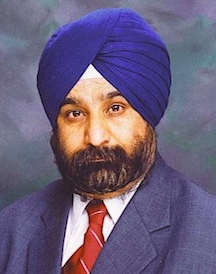
H. S. Panaser
For more than three decades, one of India’s most consequential contributions to the United States has travelled not through ports or cargo terminals, but through people: engineers, physicians, pharmaceutical scientists, researchers, technologists, entrepreneurs, academics and managers. Their work has strengthened American companies and institutions while creating powerful links back to India through knowledge, investment, entrepreneurship, professional networks and remittances.
In 2026, this relationship is entering a more uncertain phase. US visa procedures have become more demanding in several categories. The US Department of State has expanded online-presence screening and vetting that already applies to H-1B applicants and certain dependents. That is significant, but it should not be confused with a blanket policy that H-1B visas will not be renewed. The more useful question is broader: what happens if skilled mobility becomes slower, more uncertain or less attractive over the coming decade?
That question matters to both countries. India may see more experienced professionals return, establish businesses, invest, teach or collaborate remotely. The United States, meanwhile, must continue balancing immigration policy with the talent requirements of technology, medicine, research, manufacturing and entrepreneurship. The result need not be a zero-sum contest. It can become a new era of brain circulation.
From Brain Drain to Brain Circulation
The old vocabulary of “brain drain” is no longer sufficient. India has undeniably supplied large numbers of highly trained professionals to advanced economies, but those professionals have not simply disappeared from India’s economic story. They have sent money home, invested, mentored, founded companies, opened markets, built research relationships and created institutional bridges.
The World Bank estimated that India received about $129 billion in remittances in 2024, the largest total for any country. Remittances are only the most visible part of the contribution. The less measurable flows—knowledge, credibility, market access, management practice, scientific collaboration and networks—may be equally important over the long term.
The next phase should therefore be understood as Brain Drain → Brain Gain → Brain Circulation. Some professionals will return permanently. Some will remain in the United States. Others will build careers that operate across both countries. What matters is whether knowledge, capital, mentorship and opportunity can move even when people do not.
India’s Opportunity—and Its Responsibility
A return or redirection of skilled talent could become a major advantage for India, but only if the country can absorb that expertise productively. Fast growth alone is not enough. Experienced professionals need research infrastructure, competitive career pathways, entrepreneurial capital, predictable regulation, strong intellectual-property systems, globally connected universities and organizations willing to reward innovation.
India also faces a substantial skills challenge at home. In February 2026, the World Bank approved support for a major Indian skills initiative and noted a persistent mismatch between what young people are trained for and what firms need. That gap is especially important as AI changes entry-level work and increases demand for interdisciplinary capabilities.
If India can connect returning and overseas professionals with its universities, MSMEs, research institutions, start-ups and state governments, tighter global mobility could unintentionally accelerate India’s movement up the value chain. But the objective should not be to celebrate professionals leaving America. It should be to create an ecosystem in which talent can contribute to India without having to sever its global connections.
The United States and the Value of Global Talent
The United States has historically benefited from its ability to attract ambitious people from around the world. Indian-origin professionals are deeply present in technology, medicine, academia, research, pharmaceuticals and entrepreneurship. If long-term pathways become harder or less predictable, employers may respond in different ways: develop more domestic talent, automate, distribute work internationally, expand global capability centers, or move selected research and operations closer to available skills.
The consequences cannot responsibly be reduced to a claim that America will inevitably suffer a “brain drain.” Much will depend on education, workforce participation, AI adoption, corporate investment, immigration rules and the ability of US institutions to attract and retain both domestic and international talent. The strategic point is that human capital has become part of national competitiveness, and talent policy now interacts directly with technology policy, industrial policy and diplomacy.
AI and IT: From Outsourcing to Intellectual Property
Artificial intelligence changes the scale of the discussion. The next generation of US-India technology cooperation will not be defined simply by software services or the number of programmers available. It will depend on AI infrastructure, data centers, energy, semiconductors, cybersecurity, cloud systems, advanced analytics, research and—above all—people who can combine technical expertise with domain knowledge.
India’s opportunity is to move further from being primarily a provider of technology services toward becoming a creator and owner of platforms, models, enterprise solutions, intellectual property and globally competitive products. Returning and overseas professionals can accelerate this transition by bringing experience in product development, corporate governance, research management, financing and global customer markets.
The skills of the next twenty years will increasingly be hybrid: AI + Medicine; AI + Pharmaceuticals; AI + Manufacturing; AI + Agriculture; AI + Cybersecurity; AI + Education; AI + International Trade; and AI + Diplomacy. The countries and institutions that train people across these boundaries will have an advantage.
A Timely Example: Powering the AI Economy
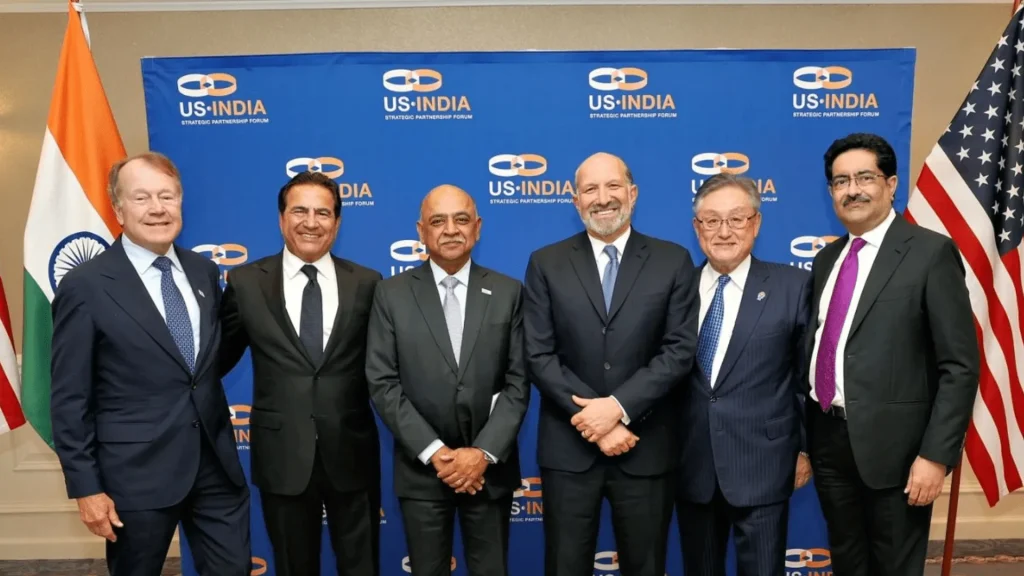
During UNGA week in New York, the Consulate General of India, New York, in collaboration with ReNew and the U.S.-India Strategic Partnership Forum (USISPF), convened a roundtable titled “US-India Partnership: Powering the AI Economy.” The CGI communication described participation by more than 40 leaders from government, industry, academia, investment and civil society, including Santosh Kumar Sarangi, Secretary, Ministry of New & Renewable Energy; Dr. Mukesh Aghi, President & CEO of USISPF; Neelkanth Mishra, Executive Director at the World Bank; Sumant Sinha, Chairman & CEO of ReNew; and Vaishali Nigam Sinha, Co-founder of ReNew.
The agenda demonstrates how broad the AI economy has become: scaling data-center and AI-infrastructure investment across the US-India corridor; ensuring reliable, resilient power and grid readiness; mobilizing public, private and blended capital for cross-border energy and digital infrastructure; and aligning policy, regulatory and technology frameworks. A report titled “Powering the AI Age: India’s Next Energy Export Opportunity” was launched on the occasion.
This is an important signal. The AI revolution will require not only AI engineers but also energy specialists, semiconductor experts, cybersecurity professionals, financial specialists, regulators, educators and a workforce trained for new categories of employment. The future US-India AI corridor will require capital, computing power and energy—but it will also require people.
Pharmaceuticals and Healthcare: From Pharmacy to Laboratory
The pharmaceutical sector offers a parallel opportunity. India has built global strength in generics, vaccines, APIs and manufacturing. The next frontier is deeper participation in new-drug discovery, biologics, advanced therapies, clinical research, digital health, pharmaceutical AI and original intellectual property.
Indian scientists and executives working in the United States have accumulated decades of experience in FDA-regulated environments, multinational pharmaceutical companies, biotechnology ventures and research universities. India should create structured pathways through which that expertise can contribute without requiring permanent relocation. A scientist in New Jersey or Boston should be able to mentor researchers, co-develop programs and connect institutions in Hyderabad, Ahmedabad, Bengaluru, Chandigarh or Mumbai.
This is also where skill development becomes strategic. India’s pharmaceutical ambitions require medicinal chemists, biostatisticians, regulatory specialists, clinical-development experts, data scientists, manufacturing technologists and AI professionals who can work together. Diaspora networks can help shorten the distance between these capabilities.
Food, Agriculture and the Next Technology Frontier
Food and agriculture should not be treated as separate from the technology story. Over the next twenty years, food security will increasingly intersect with biotechnology, climate science, precision agriculture, supply-chain analytics, nutrition, cold-chain infrastructure, water management and AI.
India’s agricultural scale provides an extraordinary environment for innovation. US-India partnerships can connect American research capabilities and capital with Indian scale, entrepreneurship and field experience. Diaspora scientists, investors, agribusiness professionals and academics can help build collaborations around climate-resilient crops, food processing, precision farming and technology-enabled supply chains.
The Bridge Builders: USISPF, USIBC and People-to-People Partnership
The transformation from brain drain to brain circulation cannot be accomplished by governments alone. It requires institutions capable of connecting government, business, technology, academia, research and the diaspora.
Dr. Mukesh Aghi, President & CEO of USISPF, and Ambassador (ret.) Atul Keshap, President of the U.S.-India Business Council (USIBC), represent two important institutional dimensions of this bridge-building. In 2026, USISPF has convened cooperation across AI, semiconductors, data centers, advanced manufacturing, healthcare, resilient supply chains and state-level partnerships. As an official partner of the India AI Impact Summit 2026, it organized programming on AI infrastructure, welfare-focused AI deployment and skilling for the AI age.
USIBC, led by Ambassador Keshap, describes its role as linking governments with businesses and supporting long-term commercial partnerships between the United States and India. Together, these institutions illustrate how bilateral relations are increasingly built at several levels at once: government to government, business to business, university to university, scientist to scientist, entrepreneur to investor—and people to people.
The diaspora intersects with virtually every one of these relationships. The central message is therefore simple: The diaspora should not remain merely a beneficiary or observer of the US-India relationship. It can become one of its builders.
Talent Diplomacy: A New Layer of Bilateral Relations
I describe this emerging phenomenon as Talent Diplomacy. Traditional diplomacy will remain the responsibility of governments and professional diplomats. But alongside it is a growing form of relationship-building in which scientists, physicians, professors, entrepreneurs, executives, technologists and diaspora organizations create durable connections that governments alone cannot manufacture.
A research partnership can strengthen a bilateral relationship. So can a student exchange, a pharmaceutical collaboration, an AI program, an investment that creates jobs, or a mentor who helps a young person discover an international opportunity. Talent Diplomacy does not replace statecraft; it adds human infrastructure beneath it.
This approach is especially relevant when formal policy is uncertain. Trade negotiations, visa rules and geopolitical priorities can change. Relationships among universities, laboratories, companies and professional communities can provide continuity. They also create practical reasons for two societies to keep working together.

The Role of the UN Global Compact
The United Nations Global Compact (UNGC) should be understood accurately in this discussion. It is not an immigration authority and does not determine visa policy. Its relevance lies in responsible business, decent work, workforce development and sustainable growth.
Under Sustainable Development Goal 8, the UN Global Compact encourages businesses to educate and train their labor forces, create decent formal-sector jobs and respond responsibly to changes driven by automation, globalization and demographics. Its India network currently lists more than 500 participants, with pharmaceuticals, software, computer services and professional business support among important participating sectors.
That gives UNGC a useful convening role around responsible AI, lifelong learning, reskilling, inclusion and business-led workforce development. For the US-India corridor, such frameworks can help companies think beyond short-term labor supply and toward a more sustainable talent ecosystem.
GLO-INDIA: From Diaspora Network to Diaspora Action
For the Global Indian Diaspora Alliance (GLO-INDIA), with more than 18,000 members and subscribers, this moment creates an opportunity to move from connection to structured action. Our role need not duplicate organizations such as USISPF or USIBC. It can complement them by focusing on the human network beneath trade, technology and diplomacy.
Gen-Z deserves particular attention. The next generation should inherit more than an emotional connection with India. It should inherit a professional network, a knowledge network and an opportunity network. Established diaspora professionals can transfer relationships, experience and access that took decades to build.
A pharmaceutical scientist can mentor a research team. An AI executive can connect a university with an industry project. A physician can link health systems. An entrepreneur can introduce a start-up to capital. A professor can establish an exchange. A business leader can guide an MSME entering the US market. Individually these actions may look modest; collectively they form the human infrastructure of a strategic partnership.
GLO-INDIA 10-Point Action Agenda: 2026-2046
1. Global Indian Knowledge Network. Create a structured directory of experienced diaspora professionals willing to mentor, advise and connect institutions across borders.
2. Gen-Z Mentorship and Internship Bridge. Connect students and young professionals with mentors, internships, research exposure and leadership opportunities in India and the United States.
3. AI and Digital Skills Council. Bring technologists, educators and industry together around AI literacy, cybersecurity, data skills and interdisciplinary training.
4. Pharma and Healthcare Innovation Network. Link diaspora scientists and executives with Indian universities, research institutes, start-ups and manufacturers in drug discovery, APIs, biologics, regulatory science and digital health.
5. University-to-University Partnerships. Encourage joint research, faculty exchange, executive education and student collaboration between institutions in both countries.
6. MSME and Entrepreneurship Bridge. Help promising Indian and diaspora enterprises understand markets, partnerships, compliance, financing and commercialization opportunities.
7. Food, Agriculture and Climate Technology Forum. Connect expertise in precision agriculture, food processing, biotechnology, climate resilience and supply chains.
8. Return-and-Circulate Talent Pathways. Develop practical mechanisms for professionals who return to India—or remain abroad—to teach, mentor, invest, advise and collaborate without requiring permanent relocation.
9. People-to-People and Talent Diplomacy. Use cultural, professional, academic and business relationships to deepen mutual understanding and create durable institutional connections.
10. Annual US-India Diaspora Talent Report. Track emerging skills, mobility trends, research opportunities and diaspora-led collaborations so that discussion is guided by evidence rather than assumption.
The 2046 Question
By 2046, the most important measure may not be how many Indians moved to America or how many returned to India. It may be how effectively the two countries circulated knowledge between their societies.
The objective should not be to stop migration, nor to encourage talented Indians to leave the United States. It should be to make knowledge mobile even when people are not. America benefits when it continues to attract and develop exceptional talent. India benefits when its global professionals remain connected to its development. The diaspora succeeds when contribution to one society does not require disengagement from the other.
That is why the future should not be framed as America versus India. It should be about what America and India can build together, with the diaspora serving as one of the bridges between them.
That is how brain drain becomes brain circulation.
And that is how diaspora becomes diplomacy.
Sources and Reference Notes
• U.S. Department of State, “Announcement of Expanded Screening and Vetting for Visa Applicants,” updated September 18, 2026.
• World Bank, “In 2024, remittance flows to low- and middle-income countries are expected to reach $685 billion,” estimating India’s 2024 remittances at $129 billion.
• World Bank, “World Bank Supports India’s Ambitious Skills Program to Better Prepare Youth for the Job Market,” February 2, 2026.
• U.S.-India Strategic Partnership Forum (USISPF), 2026 activities and India AI Impact Summit 2026 materials.
• U.S.-India Business Council (USIBC), U.S. Chamber of Commerce, mission and leadership materials.
• United Nations Global Compact, SDG 8 Blueprint: Decent Work and Economic Growth; UN Global Compact India network overview.
• Consulate General of India, New York communication on “US-India Partnership: Powering the AI Economy,” convened with ReNew and USISPF during UNGA week, 2026.
H. S. Panaser — President, Global Indian Diaspora Alliance (GLO-INDIA) | Chairman, Global Indian Trade & Cultural Council (GITCC), USA | Global Business Strategist & Advisor — Pharmaceuticals, Healthcare, IT & AI | M&A & Market Entry Advisor | Former GSK Executive | Social Activist & Columnist