








Our Bureau
New York, NY
While India-US trade talks have reached a broad understanding, changes in US tariff rules and the ongoing Section 301 process remain key issues, said External Affairs Minister S Jaishankar.
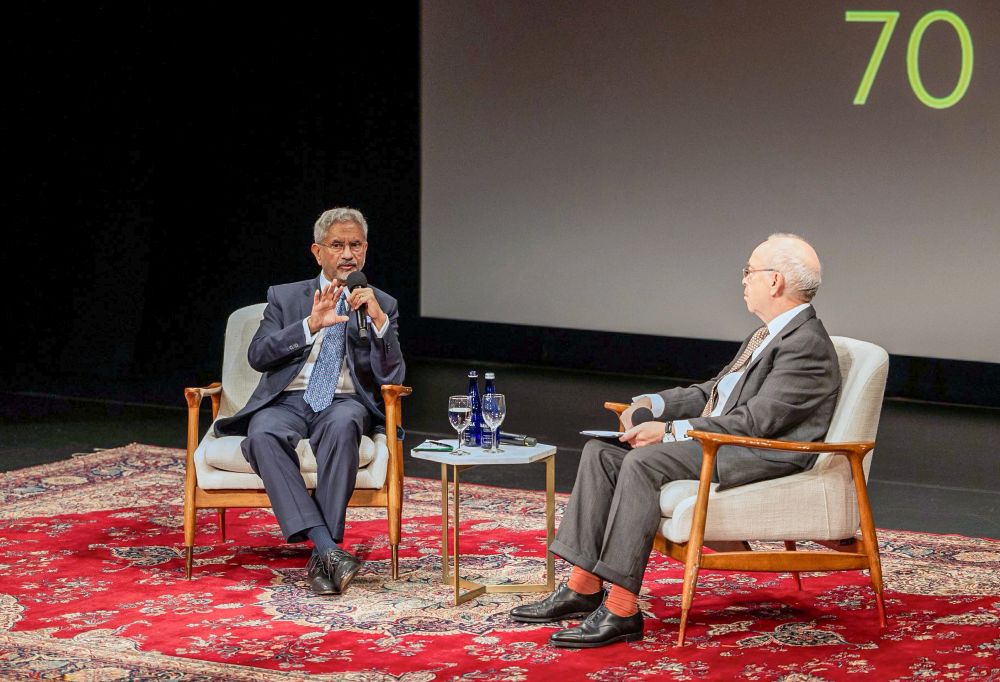
Speaking at a special interaction hosted by the Asia Society, Jaishankar said the ongoing Section 301 process remains a factor in deciding when to conclude the deal.
“The 301 process is still in the works, it’s still unfolding. So the issue for us is at what point do you close out an agreement which is very, very far advanced,” he noted.
Section 301 of the US Trade Act of 1974 allows the US to investigate trade practices it considers unfair and take enforcement action, including imposing additional tariffs. The US Trade Representative (USTR) is responsible for conducting such investigations and responding to practices that may violate US trade rights or agreements.
In July, the US Trade Representative (USTR) announced final measures under Section 301 following an investigation into forced-labour-related import restrictions and enforcement practices across 60 economies, including India.
The USTR also imposed an additional 10 per cent tariff on Indian imports, lower than the 12.5 per cent initially proposed in June. However, sustained engagement with the US helped place India in a lower tariff tier, as per a statement by the Ministry of Commerce & Industry.
Explaining the complexity of the negotiations, Jaishankar pointed to differences in the structure of the Indian and US economies, particularly India’s large base of small farmers and producers.
“India is a society of small producers, small agriculture producers, small factories. So, you know, apart from the per capita gap between India and the United States, the nature of production, nature of society is very different. So, a trade negotiation required a certain amount of, I think, of patience and detailing to see it through,” he said.
As per Jaishankar, the two sides have now moved closer to an understanding. “…expectation that it could rapidly move forward, I think, was tested against a ground reality which was much more complex. So, today, I think we have reached a situation where there is more or less an understanding on the trade agreement.”
Earlier, Commerce and Industry Minister Piyush Goyal had described the bilateral trade pact as “done and dusted,” saying it could move forward once India secures appropriate competitive advantages in the US market relative to regional competitors, including ASEAN nations, China and Bangladesh.