








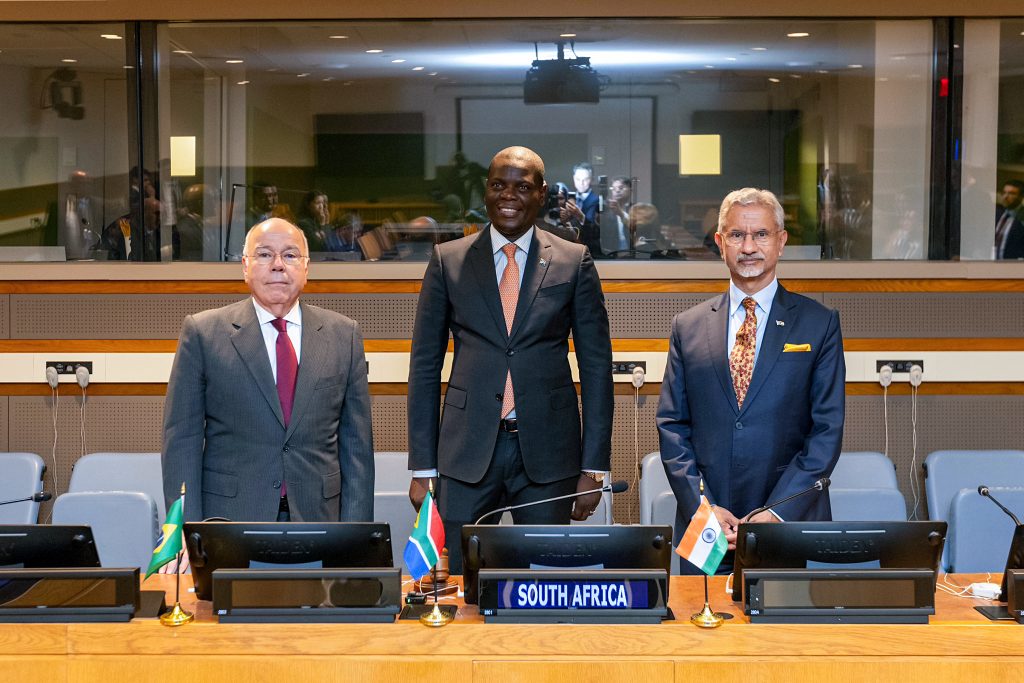
At the UN General Assembly, India, Brazil and South Africa are pushing for changes to global institutions, arguing that the emerging world order requires greater representation for developing economies
The growing frustration with the slow pace of reform at the United Nations is becoming increasingly difficult to ignore. At the 81st session of the UN General Assembly in New York, India has once again placed the question of institutional reform at the centre of its diplomatic engagement, arguing that the global system cannot remain frozen while the balance of economic and political power continues to change.
External Affairs Minister S Jaishankar, speaking at a ministerial session on “Ruptures & Ramparts: Building Bridges for a Changing World”, said the growing demand for change reflected a deeper concern about the credibility and effectiveness of international institutions.
His argument was direct: reform cannot remain trapped in procedural discussions. “If we are serious about reform, we need some text-based negotiation because you can’t have a negotiation without a text,” Jaishankar said, warning that without substantive negotiations, the process risks becoming a means of simply gaining time.
For India, the issue is not about weakening the United Nations but making it more representative of contemporary realities. Jaishankar argued that those who genuinely care about the UN should support its reform, describing the organisation as being “behind the curve” in relation to the world it is expected to represent.
The message acquires greater significance as developing countries increasingly seek a stronger voice in decisions affecting global security, trade, technology, climate and finance.
India, Brazil and South Africa provided a broader Global South perspective through the IBSA Foreign Ministers’ Meeting on the sidelines of the UNGA. The three countries called for comprehensive reform of the UN Security Council, seeking a system that is more democratic, representative and reflective of contemporary realities.
The IBSA position is important because India, Brazil and South Africa represent three major developing economies from Asia, Latin America and Africa. Their cooperation provides a platform through which concerns shared by large parts of the Global South can be articulated collectively.
The countries also highlighted the economic consequences of conflicts. Energy and food insecurity, inflation and fiscal pressures are increasingly affecting developing economies, demonstrating how geopolitical conflicts far beyond their borders can have direct consequences for their populations.
This has become a central concern for countries of the Global South. Decisions taken in major geopolitical conflicts can influence energy prices, food supplies, trade routes and public finances in countries that have little role in determining those conflicts.
IBSA therefore also called for balanced, fair and mutually beneficial trade arrangements. The objective, according to the joint statement, is to promote equitable growth, inclusive development and greater economic resilience.
The demand for greater representation extends beyond the Security Council. India, Brazil and South Africa also backed continued reform of global economic governance so that developing and emerging economies can participate more effectively in international decision-making.
Technology is emerging as another important part of this conversation. The three countries called for universal and meaningful connectivity and greater deployment of digital infrastructure, while recognising the potential of artificial intelligence to contribute to economic growth and sustainable development.
For developing countries, access to technology is increasingly connected to questions of economic competitiveness. Digital infrastructure and AI could influence productivity, employment, education and public services, but unequal access could also widen existing development gaps.
Climate and energy transition were similarly prominent in the IBSA discussions. India, Brazil and South Africa backed greater renewable-energy capacity in the Global South, improvements in energy efficiency and wider deployment of sustainable fuels, including biofuels, biogases and low-emission hydrogen.
The IBSA ministers also highlighted women’s empowerment and the need to remove social and economic barriers facing women and girls, adding another dimension to their broader development agenda.
Jaishankar’s wider UNGA schedule reflected India’s effort to engage simultaneously with major powers, neighbouring countries and developing nations. His meetings included leaders and foreign ministers from Antigua and Barbuda, Egypt, Jordan, the United Kingdom, Tajikistan, Australia, Uruguay, the Maldives, Ghana, Singapore and Estonia.
The discussions covered bilateral relations, regional conflicts, development partnerships, climate cooperation, food and energy security and multilateral cooperation.
This broad diplomatic engagement reflects the increasingly interconnected nature of India’s foreign policy. New Delhi is simultaneously seeking stronger relationships with major powers while working with developing countries to reshape multilateral institutions.