








Our Bureau
London
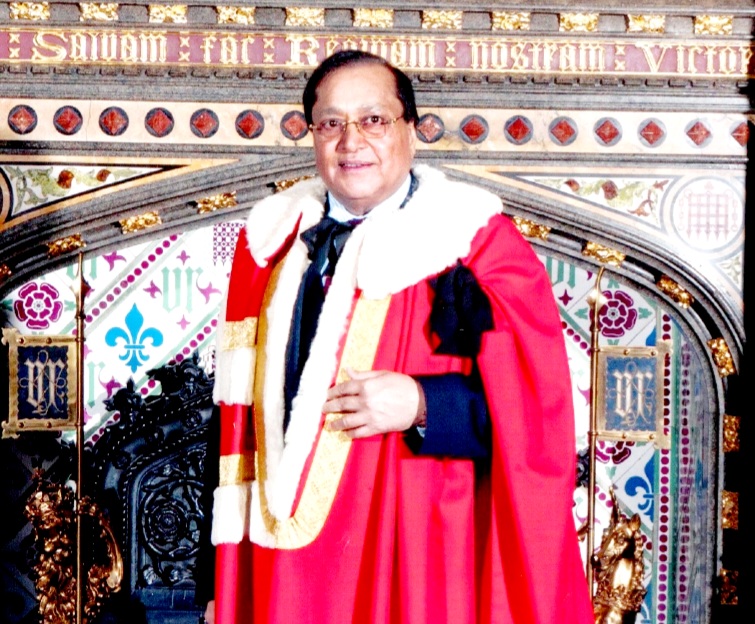
Lord Rami Ranger, businessman, philanthropist, community leader and member of the House of Lords, has launched a legal challenge seeking the restoration of his Commander of the Order of the British Empire (CBE), arguing that the case raises fundamental questions about freedom of expression, fairness, and the future of democratic debate in Britain.
Lord Ranger was awarded an MBE in 2005 and a CBE in 2016 in recognition of his outstanding contributions to business, job creation, community cohesion and charitable causes. In 2019, he was appointed to the House of Lords in acknowledgement of decades of public service and leadership.
The current legal proceedings challenge the decision to remove his CBE, a decision that Lord Ranger believes failed to adequately consider his lifetime of service to the United Kingdom and relied upon comments that were protected expressions of opinion.
“This case is about far more than my honour,” Lord Ranger said. “It is about whether citizens in a democratic society can express legitimate views without fear that their achievements and public service will be erased because others disagree with them.”
Throughout his public life, Lord Ranger has been a vocal advocate for stronger community relations, economic opportunity, and the contribution of Britain’s diverse communities. He has also spoken openly on matters relating to media accountability, extremism, and issues affecting India and the British-Indian community.
As a Peer of Indian origin, Lord Ranger publicly criticised the BBC documentary The Modi Question, which he believed presented a misleading and unfair portrayal of Indian Prime Minister Narendra Modi. He has also consistently opposed Khalistani separatism, arguing that extremist voices do not represent the wider Sikh community and should not be allowed to divide communities.
Supporters of Lord Ranger argue that he has been treated unfairly and subjected to a disproportionate response for expressing views on matters of public importance. They contend that democratic societies must protect the right to voice controversial opinions, provided such opinions remain within the law.
“This is not about whether everyone agrees with what was said,” said one supporter. “It is about whether freedom of expression remains meaningful when individuals face severe consequences simply for holding unpopular views.”
Lord Ranger maintains that honours should encourage public service and civic engagement, not become instruments that discourage robust public debate.
“Freedom of speech is the cornerstone of democracy,” Lord Ranger stated. “If citizens are unable to express their views freely, democracy itself is weakened. A society that suppresses lawful opinions risks losing the diversity of thought that drives progress and national development.”
The High Court case is expected to examine important constitutional questions concerning the balance between public honours, freedom of expression, proportionality, and due process.
Lord Ranger believes that restoring his CBE would not merely correct an injustice to one individual but would reaffirm Britain’s long-standing commitment to civil liberties, fairness and the rule of law.
“I remain proud of my service to this country,” Lord Ranger said. “I will continue to stand up for freedom of speech, equal treatment under the law, and the democratic values that have made Britain one of the world’s greatest democracies.”