








Our Bureau
New Delhi
With the conflict in West Asia into its fifth week now, Iranian Ambassador to India, Mohammad Fathali, hailed New Delhi’s call for dialogue and restraint and underlined that it can play a highly effective role.
He made the remarks on Monday in an interview.
When asked how he views India’s stance in the conflict so far and the kind of conversations taking place between New Delhi and Tehran, the Ambassador said, “India’s call for dialogue and restraint is a commendable and responsible position. We believe that the role of countries like India can be highly effective under these circumstances.”
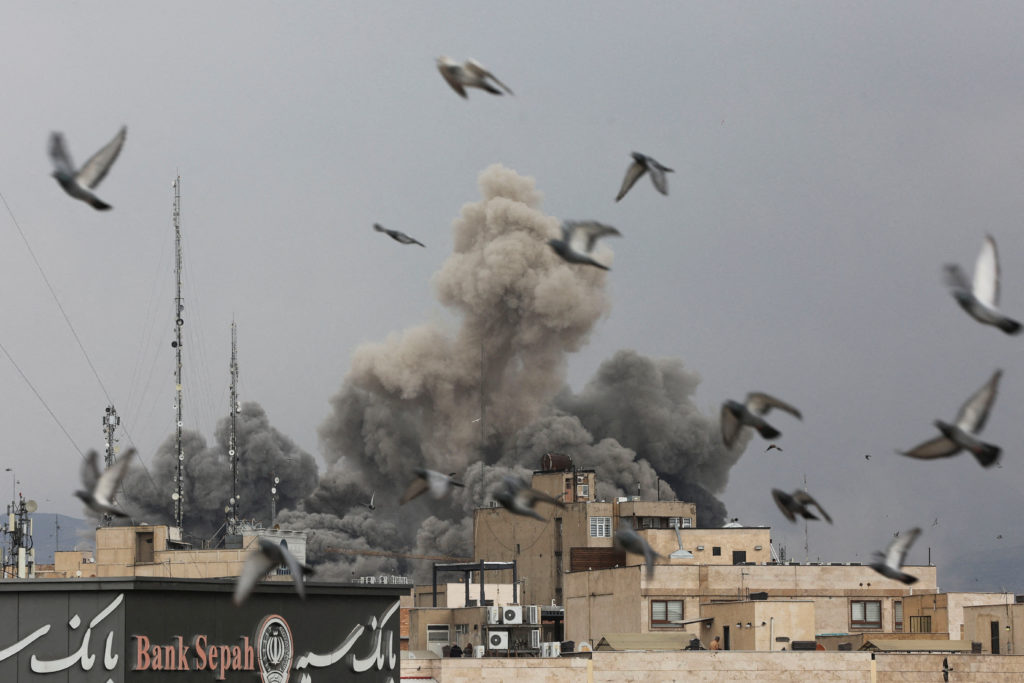
He underlined that at the same time, Iran expects all independent and freedom-seeking countries to explicitly condemn the military and aggressive actions by US and Israel, “which have violated Iran’s national sovereignty and targeted civilians and civilian infrastructure, including schools, universities, hospitals, residential areas, and economic infrastructure.”
Ambassador Fathali said Iran has never sought war and has repeatedly emphasised that it would not initiate any conflict.
“At the same time, we made it clear that if a war were imposed on us, the management of its end–in terms of timing, scope, and geography–would be in Iran’s hands. What is taking place today is purely legitimate self-defence against external aggression”, he said.
When asked about US extending the conditional sanctions waiver for Chabahar port until April 26, Ambassador Fathali said that economic and developmental cooperation, especially major regional projects such as Chabahar, should not be affected by unilateral approaches and unlawful sanctions.
“Chabahar Port is a strategic project of regional and international importance, playing a key role in enhancing regional connectivity, particularly for India’s access to Central Asia”.
He said in this regard, Iran remains in continuous contact and consultation with the Indian side, and cooperation in this area is ongoing.
“We emphasize the continuation and strengthening of these collaborations, independent of external pressures, and hope that project implementation proceeds without interruption”, he said.
When asked about Iranian achievements– strategically, militarily, and diplomatic, he said, “From a strategic perspective, one of the most important outcomes has been the failure of the initial objectives of the opposing side, including the United States and the Zionist regime. They entered this path with expectations such as regime change, but in practice, they have encountered the opposite result.”
“This war has led to greater cohesion and solidarity among the Iranian people. Throughout this period, the public, by showing presence and supporting the state, has demonstrated that it is more united than ever in the face of external pressure”, the Ambassador said.
On the political front, he highlighted the shift in tone on US President and said that it reflected miscalculations in policymaking by US with regard to the Strait of Hormuz.
“Politically, the shift in tone and declared objectives of the opposing side is noteworthy. For instance, Trump, who previously spoke about issues such as regime change, is now focused on reopening the Strait of Hormuz, even though this passage was open to all countries prior to the conflict. This reflects miscalculations in policymaking and incorrect assessments by the U.S. government.”
He underlined that Iran has shown that it is capable of withstanding pressure and altering imposed equations in its favor.
“In general, I believe our adversary is now facing a strategic failure in its assessment in three areas: Iran’s leadership, its people, and its military capability”, he said.
The Ambassador underlined the importance of BRICS as an important multilateral mechanism on the international stage and said that for Iran it represents an important platform for expanding cooperation with emerging economies and reinforcing approaches independent of traditional global structures.
The Iranian Ambassador said that urged BRICS member states to adopt a responsible position regarding current developments and to condemn “unlawful and criminal actions by the United States and the Zionist regime” and highlighted that BRICS can play an effective role in supporting the principles of international law, countering unilateralism, and helping to reduce tensions.
His remarks come amid the developing security situation in West Asia and the Gulf region as the US-Israel and Iran conflict stands in its second month now, with hostilities across civilian, energy and military infrastructure in the region.